
EN
- CN
- EN

Jiantao Fan - Dr.
CTO
● 2005-2014 Beijing University of Chemical Technology Undergraduate, Master, Ph.D.
● 2014-2017 Postdoctoral fellow at Simon Fraser University, Canada
● Project Leader of National Key Research and Development Program of China
● Core members of Guangdong innovation and entrepreneurship team
● Core members of Shenzhen Peacock Team
● Shenzhen "Peacock Plan B" talents

Hui Li - Dr.
Chairman/CEO
● National "specially hired" experts
● The person in charge of the key hydrogen energy research and development projects of the national "14th Five-Year Plan"
● Chair Professor, Southern University of Science and Technology
● 1982-1989 Bachelor and Master of Chemical Engineering, Tsinghua University
● 2006 Ph.D. in Electrochemical Engineering, University of British Columbia, Canada
● 2007-2015 Senior Research Fellow of the National Research Institute of Canada
● In 2015, edited the first international monograph on PEM electrolyzed water
● More than 100 SCI papers, 4 monographs, 8 chapters, and more than 20 authorized patents

Xu Shaoyi - Ph.D.
COO
● Beijing University of Chemical Technology undergraduate and master
● Dr. Southern Illinois University, USA
● Postdoctoral fellow at Simon Fraser University, Canada
● Shenzhen "Peacock Plan C" talents
● Responsible for the electrolytic reactor division

Zhao Deshu
Assistant to the chairman
● Ten years of practical experience in hydrogen energy
● Co-founder of Taiji Power
● Head of Ballard South China
● Assistant General Manager of Yihuatong
● BYD Apple Computer IMAC MINI project manager

News
新闻资讯
The total size of the electrolyzer market in 2027 is 396 billion? How foreign research institutions view China's hydrogen energy development
2022-04-11 09:46:53
Click:
“
Recently, HSBC Qianhai released the "China Green Hydrogen Ready for prime time" (hereinafter referred to as the "Report"). There are relatively few special researches on China by foreign companies, an
”
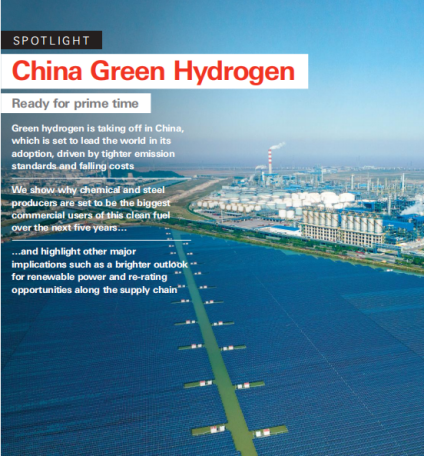
Recently, HSBC Qianhai released the "China Green Hydrogen Ready for prime time" (hereinafter referred to as the "Report"). There are relatively few special researches on China by foreign companies, and more researches are conducted as a region in the analysis of the development of the global hydrogen energy industry. From the perspective of foreign research institutions, the report focuses on the analysis of China's green hydrogen market, predicts the development inflection point, market size, cost reduction trend and application scenarios of China's green hydrogen market, and puts forward a new judgment due to the development of green hydrogen. Two rules for valuing businesses.
The core points of the report include:
(1) China's green hydrogen LCOH cost will drop by 38% in 2022-2025;
(2) In the next five years, the installed capacity of electrolyzers in China will reach 120GW, the total market size will reach 396 billion yuan, and there will be an upward inflection point in the market between 2024 and 2025;
(3) Chemical industry and steel are the main commercialization scenarios of green hydrogen in the next five years, and power storage and peak shaving are the most important application scenarios of green hydrogen in the future;
(4) Enterprises in the green hydrogen industry chain will have limited revenue from related businesses in the next two years, but most of them will usher in the opportunity of valuation reconstruction.
From the forecast conclusion of the "Report", Hydrogen Cloud Chain believes that HSBC's forecast for China's green hydrogen and electrolyzer market is relatively optimistic, and some conclusions or concerns are different from common domestic views. Cross-validation with domestic reports would certainly be beneficial. The analysis of the seven key points of the "Report" by Hydrogen Cloud Chain is as follows.
一
Stage judgment: China's green hydrogen enters the starting point of "real application"
The "Report" believes that the starting point for the large-scale application of green hydrogen has been reached. The reasons include:
(1) The increase in investment in electrolyzers by chemical companies has led to an increase in market demand. Under the promotion of carbon reduction tasks, chemical companies such as Baofeng and Sinopec are increasing their investment in electrolyzers and green hydrogen links.
(2) Policies drive the development of China's green hydrogen industry. A series of policies, especially the release of the country's "Medium and Long-Term Development Plan for the Hydrogen Energy Industry (2021-2035)" and the potential support for green projects from the 2 trillion yuan stimulus plan, will further promote the development of green hydrogen.
(3) The falling cost makes the inflection point of the electrolyzer market approaching. First, the next batch of large-scale green hydrogen projects will be put into construction in 2024, and the production capacity of electrolyzer manufacturers will also expand to more than 10GW, and the cost of electrolyzers will drop significantly; the second is the deployment of next-generation solar cell technologies, such as heterogeneous junction (HJT), which may also further reduce the cost of photovoltaic power generation by 2024.
二
Market size forecast: By 2027, the total investment in the electrolyzer market will reach 396 billion yuan
Through the prediction of the scale of green hydrogen, the "Report" concluded that the total installed capacity of electrolyzers will reach 120GW in 2027. Therefore, the "Report" believes that the total size of the electrolyzer market will reach 396 billion yuan in 2027, that is, the average annual market size from 2022 to 2027 will reach 79 billion yuan (see Figure 1).
1. In 2027, the green hydrogen demand will reach 2.55 million tons, accounting for 7% of the total hydrogen demand
The "Report" predicts that by 2027, China's annual green hydrogen production will reach 2.55 million tons, accounting for 7% of China's total hydrogen supply (see Figure 2). The 2.55 million tons of green hydrogen demand comes from the steel industry and the chemical industry, respectively, and does not consider automotive use:
(1) 5% of China's steel (105.3 million tons in 2020) is produced with hydrogen, with an average of 25 kilograms of hydrogen per ton of steel, and the total demand for hydrogen energy is about 1.3 million tons (equivalent to 62GW of electrolyzer installed capacity) );
(2) 5% of the 25 million tons of chemical hydrogen production demand in 2020 will be replaced by green hydrogen (data from China Coal Processing and Utilization Association), a total of 1.25 million tons (equivalent to 58GW of electrolyzer installed capacity);
(3) There is a mismatch between the green hydrogen production area and the automobile application area. Since the cost of hydrogen storage and transportation is much higher than the cost of hydrogen production, it is unlikely to quickly form a large-scale application of green hydrogen in the transportation field.
2. The average installed capacity between 2022 and 2027 will reach 20GW, and the average annual market size will reach 79 billion yuan
2.55 million tons of green hydrogen requires 142,800 GWh of electricity per year (hydrogen conversion rate of 56 kWh/kg). If all the electricity of the electrolyzer comes from photovoltaics and the annual effective operating time of photovoltaics is 1200 hours, the total installed capacity of the electrolyzer will reach about 120GW.
Assuming that the cost of the electrolyzer system is 3.33 yuan / watt, the total market size will reach 396 billion yuan, and the average annual scale from 2022 to 2027 will reach 79 billion yuan!
However, the "Report" also emphasized that the installed capacity of electrolyzers in 2022 is expected to be about 1-1.5GW, accounting for 69% of the global installed capacity of electrolyzers! According to the hydrogen cloud chain database, this data has achieved an increase of 100%-200% compared with 2021, but the gap between the average annual installed capacity of 20GW is very large, which will lead to a sharp increase in the subsequent installation pressure.
The "Report" also makes an interesting assumption: if the electrolyzer purchases 50% of its electricity instead of using 100% photovoltaic power, due to the doubling of the electrolyzer's use time (from 1200-1500 hours to 3000 hours), the The installed capacity of the electrolyzer is also reduced to 60GW, and the LCOH of the electrolyzer is reduced by 20% due to the increase in the use time of the electrolyzer.
Chart 1 Annual expenditure of China's electrolyzer equipment system

Source: BNEF, HSBC Qianhai Securities estimates
Figure 2 Green hydrogen will account for 7% of China's total hydrogen supply in 2027

Source: China Coal Processing and Utilization Association, China Hydrogen Alliance, HSBC Qianhai Securities estimates
三
Cost forecast: Green hydrogen LCOH to drop 38% in 2025
The Report believes that the LCOH of green hydrogen will drop by 38% by 2025 (see Exhibit 3). 54% of the decline came from a decrease in photovoltaic power LCOH (about 39%) and 38% from a decrease in the cost of electrolyser systems (about 30%).
(1) The decline in photovoltaic costs mainly comes from the application of new technologies. Such as Topcon technology in 2022 and HJT technology in 2023, and the increase of polysilicon capacity in 2023.
(2) The cost reduction of the electrolyzer system comes from economies of scale and technological upgrades. According to IRENA, the cost of PEM electrolyzers could drop by 45% if annual electrolyzer production were to increase from 10MW/year to 1000MW/year (see Exhibit 4). Technological upgrades are also conducive to cost reductions, such as the application of lower-cost proton exchange membranes and catalysts.
It is worth noting that the "Report" forecast does not include the cost of hydrogen storage, transportation and bunkering, which together are more than twice the cost of hydrogen production. Therefore, the "Report" believes that green hydrogen will be first applied in areas with abundant renewable energy and close to steel and chemical industry clusters, so as to avoid transportation costs.
Exhibit 3 By 2025, China's green hydrogen LCOE will decline by 38%

Source: China Photovoltaic Industry Association, China Hydrogen Alliance, HSBC Qianhai Securities estimates
Exhibit 4 The cost of electrolyzer systems (PEM) will drop by 45% from 2021 to 2025

Source: Irish Power, HSBC Qianhai Securities Valuation
四
Application scenario prediction: Chemical steel is the fastest commercialization scenario for green hydrogen, and energy storage and peak shaving will be the most important application scenarios
As mentioned in the third part, the "Report" believes that the most commercial green hydrogen applications in the next five years are chemical industry and steel. In the future, green hydrogen will also have application prospects in transportation, heating, etc., but the most important application scenarios should be Electricity storage and peak shaving.
The "Report" believes that the lack of infrastructure and high construction costs will idle the application of hydrogen in fields other than oil and gas, chemicals and steel, but a wide range of applications will help improve the economics of hydrogen.
(1) Chemical and steel are the most promising application scenarios in the near future
Considering the price of carbon, hydrogen steelmaking will be economical. Taking steel as an example, according to the data of China Iron and Steel Industry Association, according to the proportion of hydrogen doping, carbon emissions can be reduced by 10-80% in steel production, while the cost of steel increases by 50-750 yuan/ton (the price of hydrogen is 24 yuan/kg). ). However, if the carbon cost is higher than 300 yuan / ton, the use of hydrogen can reduce the carbon cost of 45-450 yuan / ton of steel (1 ton of steel produces about 1.5 tons of carbon emissions). And considering the decline in hydrogen prices in 2025, under certain conditions, hydrogen energy steelmaking may be economical.
Therefore, although the cost is high in the short term, we believe that chemical and steel companies are willing to invest in green hydrogen. Local governments have undertaken emission reduction targets and will favor and support companies that emit less carbon.
(2) Energy storage and peak regulation are more important application scenarios
The large-scale utilization of renewable energy will increase the instability of the grid and increase the difficulty of consumption. The "Report" believes that hydrogen production from renewable energy is one of the solutions to consume excess renewable energy and can significantly reduce the cost of hydrogen production.
The "Report" believes that by 2027, due to the increase in the installed capacity of renewable energy, China will generate 865GW of peak shaving demand (to level the peak power consumption of the grid), and the above-mentioned 120GW electrolyzer facilities will account for 14% of the peak shaving capacity.
Compared with electrochemical energy storage, the "Report" believes that the flexibility of electrolyzers is higher, and the cost of energy storage is 5-15 times lower than that of electrochemical energy storage (see Figure 5). In the future, the industrial surplus of renewable energy - the grid is difficult to absorb - accelerating the application of green hydrogen and storage equipment will become a basic logic to promote the development of hydrogen energy storage.
Figure 5 Comparison of energy storage technologies: hydrogen energy storage is 5-15 times cheaper than chemical-based lithium batteries

Note: Calculated hydrogen storage costs do not include the cost of using hydrogen sources to generate electricity
Source: BNEF, Chinese Society of Hydroelectric Engineering, HSBC Qianhai Securities estimates
Exhibit 6 Green hydrogen storage can help avoid solar and wind losses

Source: HSBC Qianhai Securities
五
Blue-green hydrogen comparison: green hydrogen is more promising
The "Report" believes that the prospect of blue hydrogen is not as good as that of green hydrogen, due to the lower cost elasticity of the main blue hydrogen and the lack of mature permanent storage solutions. Green hydrogen costs less than blue hydrogen in regions rich in renewable energy by 2025. At the same time, the "Report" does not deny blue hydrogen, arguing that green hydrogen and CCUS can provide carbon reduction solutions together, rather than two mutually exclusive alternatives.
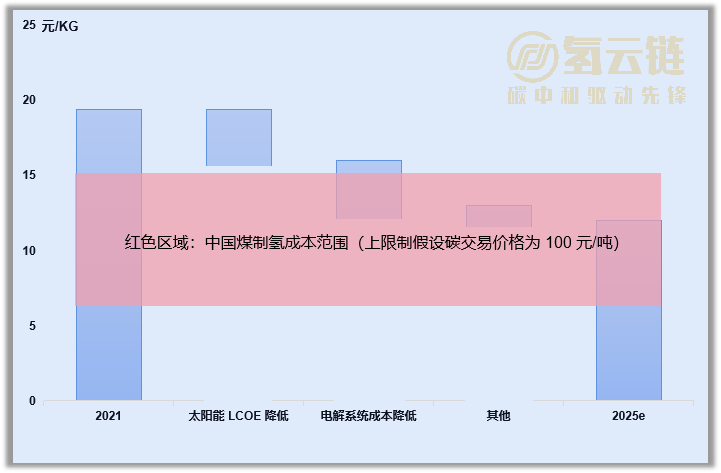
(1) The carbon price increases the cost of hydrogen production from fossils. The "Report" believes that China's carbon price will rise from 57 yuan/ton (by the end of 2021) to more than 100 yuan/ton (2025). This will increase the cost of grey hydrogen (coal-to-hydrogen + carbon price) or blue hydrogen (coal-to-hydrogen + CCUS) from 13/kg (2021) to cRMB15/kg (coal-to-hydrogen produces an average of 22.5kg carbon/kg hydrogen ). This is beneficial for improving the economics of green hydrogen (see Exhibit 7).
Exhibit 7 Green hydrogen LCOE is cheaper than coal hydrogen in 2025
Source: China Photovoltaic Industry Association, China Hydrogen Alliance, HSBC Qianhai Securities estimates
(2) The decrease in CCUS cost is limited. Carbon capture equipment usually involves electric liquefaction or gas compressors, where compressors are relatively mature and have limited room for cost reduction and efficiency improvement. According to the China CCUS report (2021) by the Chinese Academy of Environmental Planning, the levelized total cost of CCUS in 2025 will be at least 400 yuan/ton (assuming a transportation distance of 250 kilometers), and it can only drop by 23% by 2030, to about 310 RMB/ton.
(3) Lack of mature permanent storage solutions. Captured carbon dioxide needs to be transported by pipeline or liquefied and stored permanently, but geographic disasters can jeopardize storage and pose an environmental risk. There is limited market potential for converting captured carbon dioxide into other chemicals. Therefore, there is currently no mature solution for the permanent storage of captured carbon.
六
Electrolytic cell technology comparison: each has its own advantages and disadvantages, and it is difficult to distinguish the winner
The Report discusses the market outlook for PEM and alkaline electrolyzers and believes that both technologies will coexist in the market in the next few years.
The "Report" believes that both technologies have their own advantages and disadvantages, as follows:
(1) The alkaline electrolyzer is more mature, and the cost is 20-40% lower than that of PEM.
(2) PEM is more suitable for matching renewable energy power generation
(3) The scarcity of catalyst materials will push up the cost of PEM electrolyzers, making it difficult to scale up. According to IRENA data, the current capacity of iridium and platinum can only support 3 GW-7.5 GW of annual production capacity of PEM electrolyzers.
(4) Due to the similarity in principle. The development of fuel cells is conducive to accelerating the renewal of PEM electrolyzer technology.
(5) While it may be difficult to figure out which technology will win the future, common components and processes are beneficial to access larger markets such as Porous Transport Layer (PTL), Bipolar Plate (BP), and Stacked Assembly Plates and End Plates Wait.
七
Enterprise Analysis: Enterprises that enter green hydrogen through business extension will have more advantages
The "Report" believes that although the scale of green hydrogen-related revenue in the next two years is still relatively small, companies will usher in an opportunity for revaluation.
The "Report" believes that when green hydrogen is applied on a large scale from 2023 to 2027, most companies in the green hydrogen supply chain will have the opportunity to be re-rated, and companies that have the ability and resources to extend traditional business to green hydrogen business will be more advantageous, there are two types of enterprises to pay attention to:
(1) Manufacturers with technology for electrolyzers or their components
(2) Enterprises in key links in the supply chain
The "Report" has carried out a detailed analysis of Sinochem Group, Sinopec, CIMC Enric, LONGi, etc. For details, you can refer to the sole proprietorship by yourself.
Interestingly, HSBC's choice of companies is not the same as in China, and many companies are not usually included in the domestic discussion list. HSBC tends to choose enterprises in the hydrogen production end and the hydrogen consumption section. Therefore, Sinochem Group, LONGi, China Metallurgy, and Petrochemical Machinery (000852) represent green hydrogen equipment and CCUS technology, electrolyzer suppliers, and hydrogen energy steelmaking solution providers respectively. , BOP equipment manufacturers.
Author:
BriHyNergy
From:
氢云链









CONTACT
Tel: +86 0755-84530503
Email: marketing@brihynergy.com
Address: Room 101, Building B2, No. 26-1, Fuxin Road, Central Community, Pingdi Street, Longgang District, Shenzhen
SHARE US

点击右上角
分享给朋友吧
Copyright © BriHyNergy all rights reserved 粤ICP备2022120378号
 Core team